- Home
- Attractions
- Page active



Kuskuam Complex: The Legacy of Empress Mentewab in Gondar
Empress Mentewab—one of Ethiopia’s most influential royal women—left an extraordinary mark on the history, architecture, and spiritual landscape of Gondar . Her legacy stretches from the magnificent Gonderian Royal Enclosures to the sacred islands of Lake Tana. Among these monuments, the Narga Selassie Monastery stands as one of the finest artistic treasures on Lake Tana, reflecting her patronage of religious art.
The Beginning of a Queen
The story of Empress Mentewab begins with Emperor Bakaffa’s journey to the Qwara region, west of Lake Tana, to visit its monasteries and churches. During his stay, the Emperor unexpectedly fell ill with malaria. A nobleman in the area gave the King shelter and entrusted his young daughter, Birhane Moges, to nurse him. As she cared for him, the King grew fond of her and affectionately called her “Enkoye” .
After recovering and returning to the palace, Emperor Bakaffa sent elders to formally request her hand in marriage. She married the Emperor in a grand ceremony, and the area beside Fasil Ghebbi later became known as Enkoye, a name said to come from the King’s words “Anchin Enkwan Ayehush” (“I am glad I saw you”). Another tradition attributes the name to Empress Mentewab’s mother, Woizero Enkoye.
Upon marriage, Emperor Bakaffa renamed her Mentewab, meaning “How beautiful she is,” replacing her birth name, Walatta Giyorgis. After becoming Empress, she also received the honorific title Empress Birhan Mogassa (Light of Grace), symbolizing her unparalleled inner beauty—wisdom, character, skill, and leadership.
When Emperor Bakaffa died, their son Iyasu Birhan Seged (Iyasu II) took the throne. As he was still young, Empress Mentewab served as regent and became one of the most powerful and celebrated figures in Ethiopian history.
Kuskuam Complex: Empress Mentewab’s Masterpiece
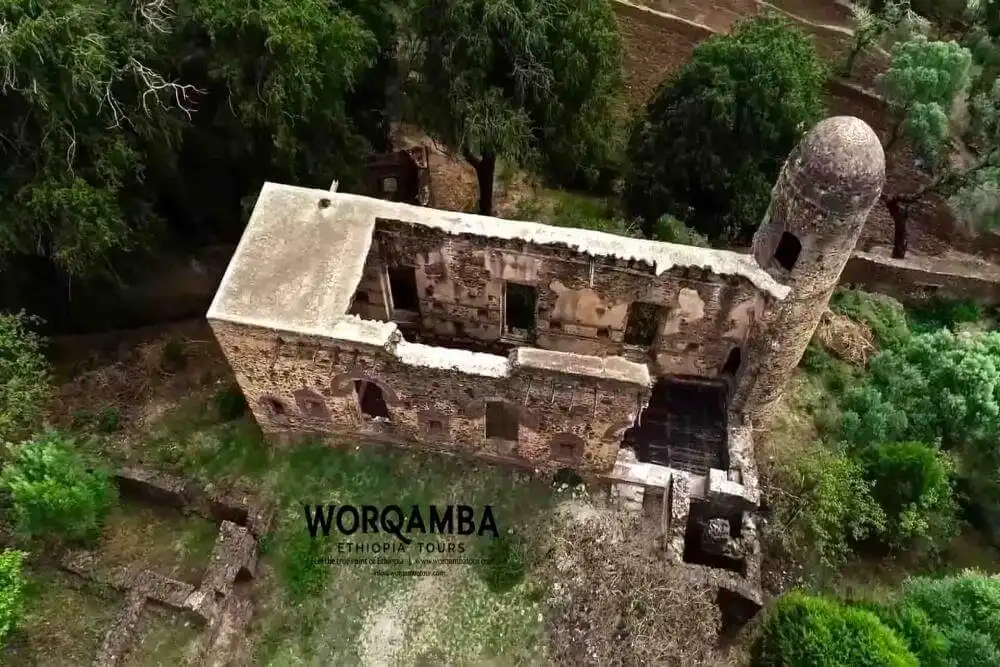
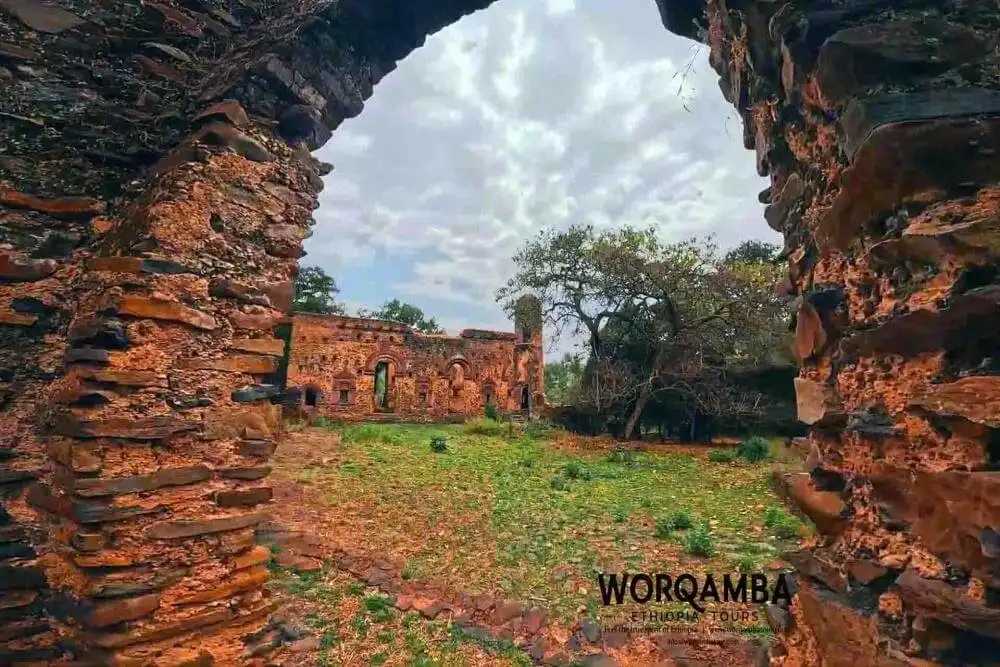
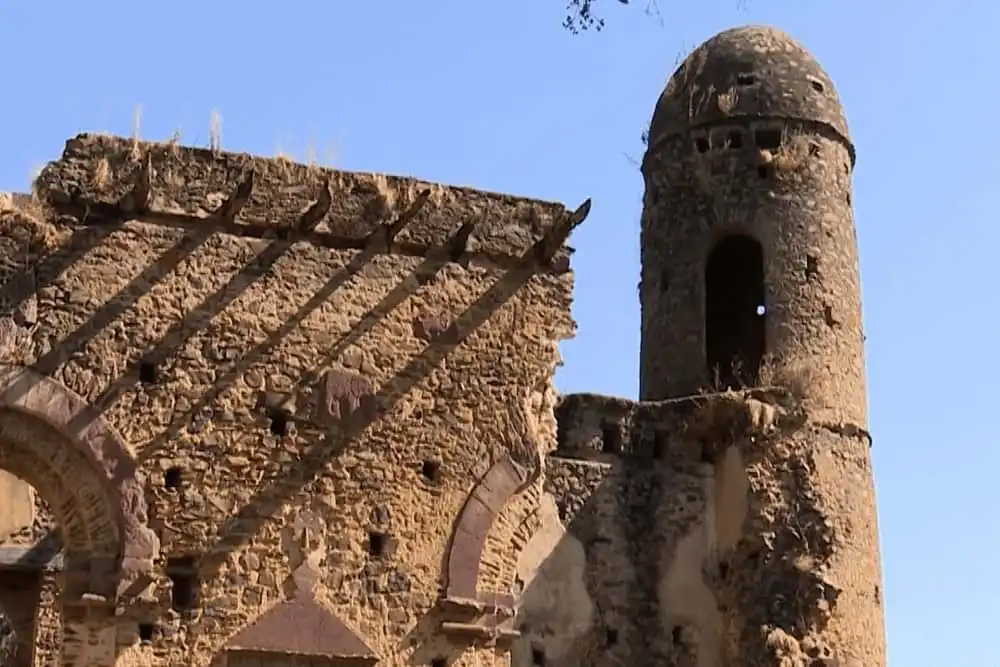
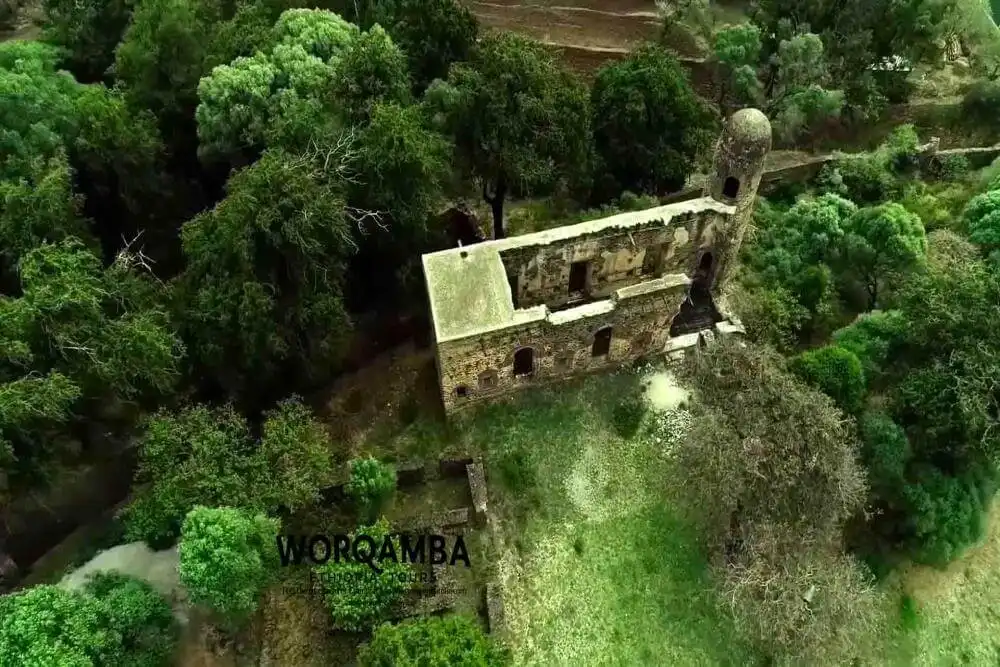
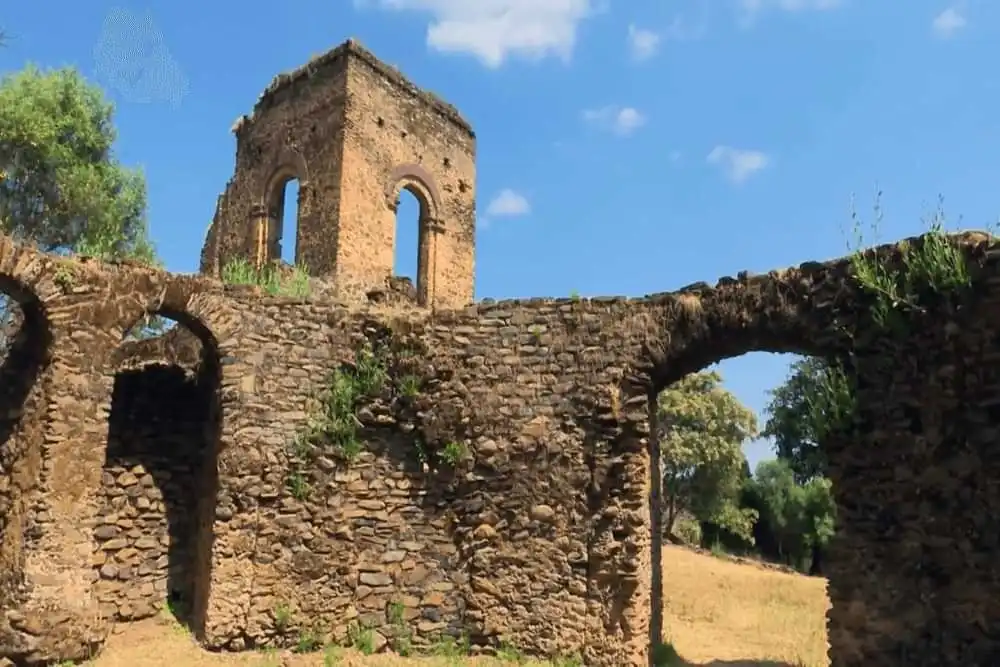
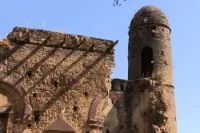
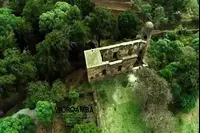
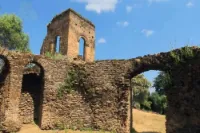
About 5 km from Fasil Ghebbi, perched on a scenic hill overlooking Gondar, lies Kuskuam (Qusquam)—a citadel of art, devotion, and royal memory. Built in 1730, the Kuskuam Complex served as the residence of Empress Mentewab and became the stage for many important historical events. Deeply devoted to the Virgin Mary and and because of her move from the main palace reminded her the Holy Family’s flight into Egypt, the Empress built the Debre Tsehay Qusquam Maryam Church at the front of the complex, with her palace standing directly behind it. From its elevated position, Kuskuam offers sweeping views across the valley toward Fasil Ghebbi and Debre Berhan Selassie Church, while showcasing elegant examples of 18th-century Ethiopian craftsmanship.
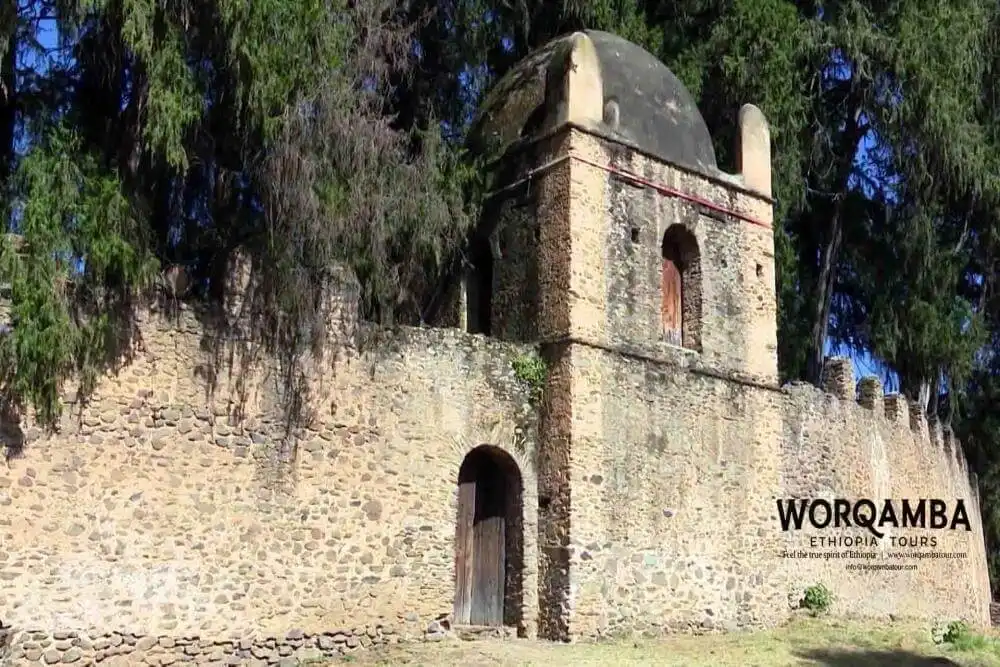
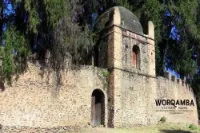
The complex is enclosed by a historic compound wall featuring six distinct gates, each reflecting the ceremonial duties and daily life of the royal court. Scattered throughout the enclosure are eight unique egg-shaped domes—tranquil structures still used by priests and monks for prayer—enhancing the site’s deeply spiritual atmosphere.
Architectural Highlights of Kuskuam complex
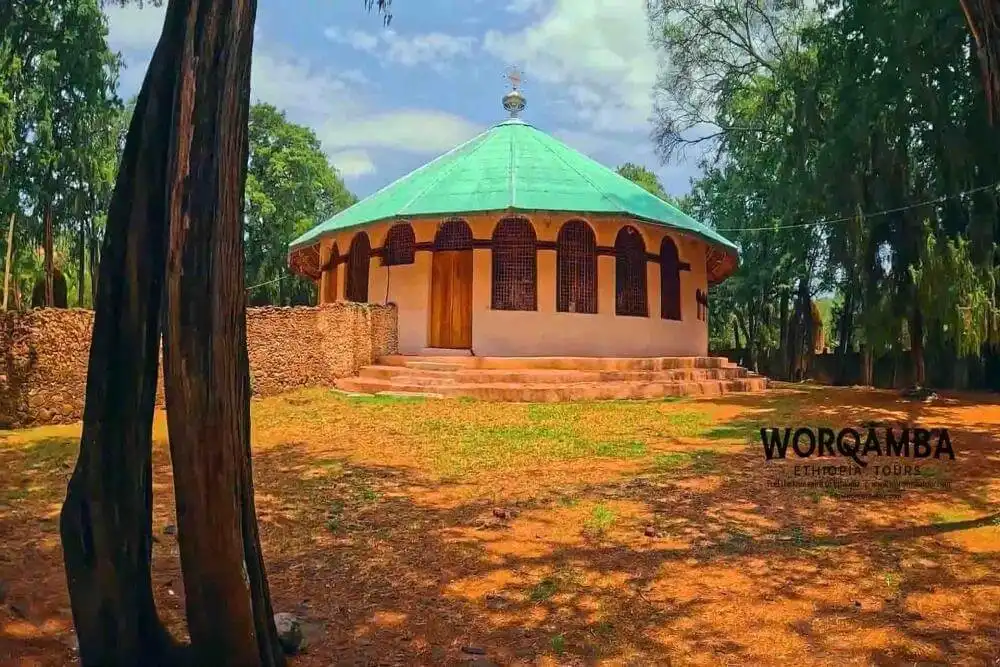
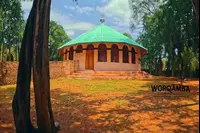
Debre Tsehay Qusquam Maryam Church
Within this fortified and contemplative setting stands the Debre Tsehay Qusquam Maryam Church, the spiritual heart of the complex. Though once damaged during the Dervish invasion, it was restored during the reign of Emperor Haile Selassie. Originally crowned with a thatched roof and now covered with corrugated iron. Its graceful “dove-eye” windows encircle the building, while its lime-mortar walls and the ring of indigenous trees surrounding it create a peaceful, inviting ambience that embodies both the artistry and devotion of Empress Mentewab’s era.
The Storehouse - Gimbe Geffi
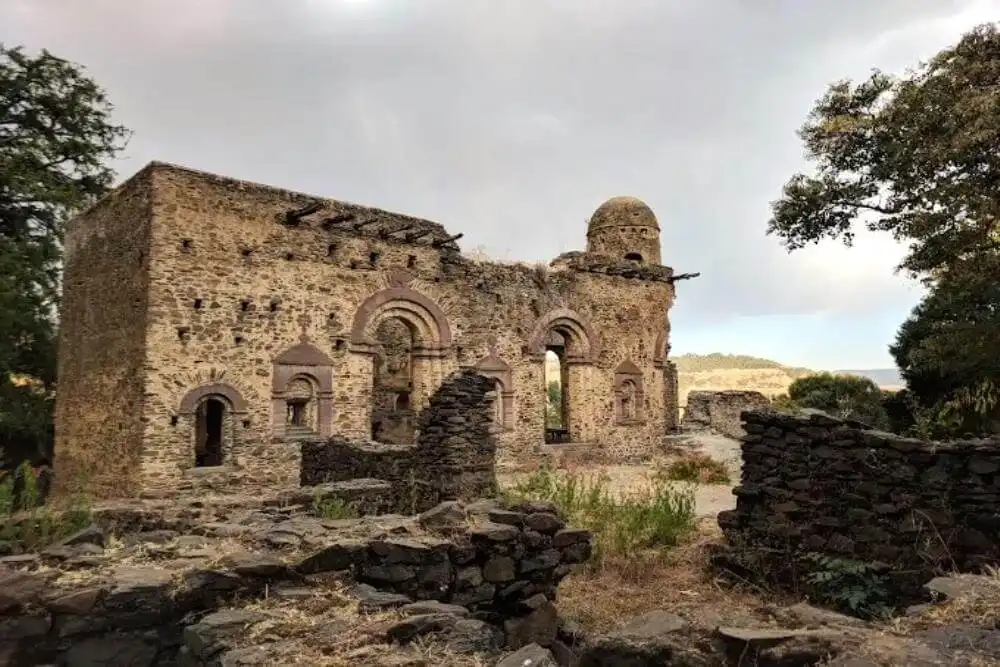
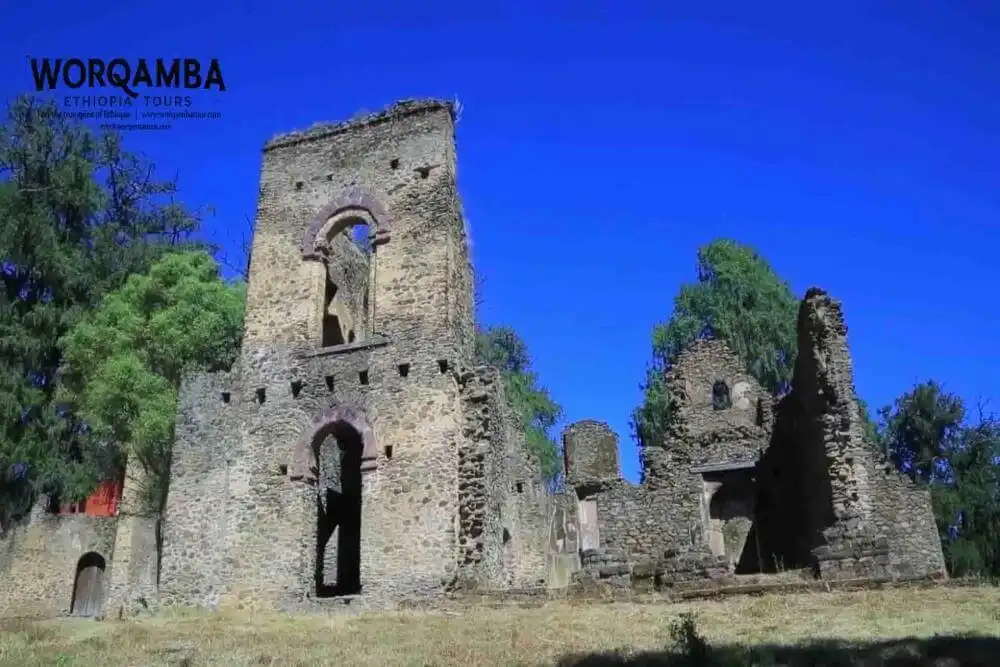
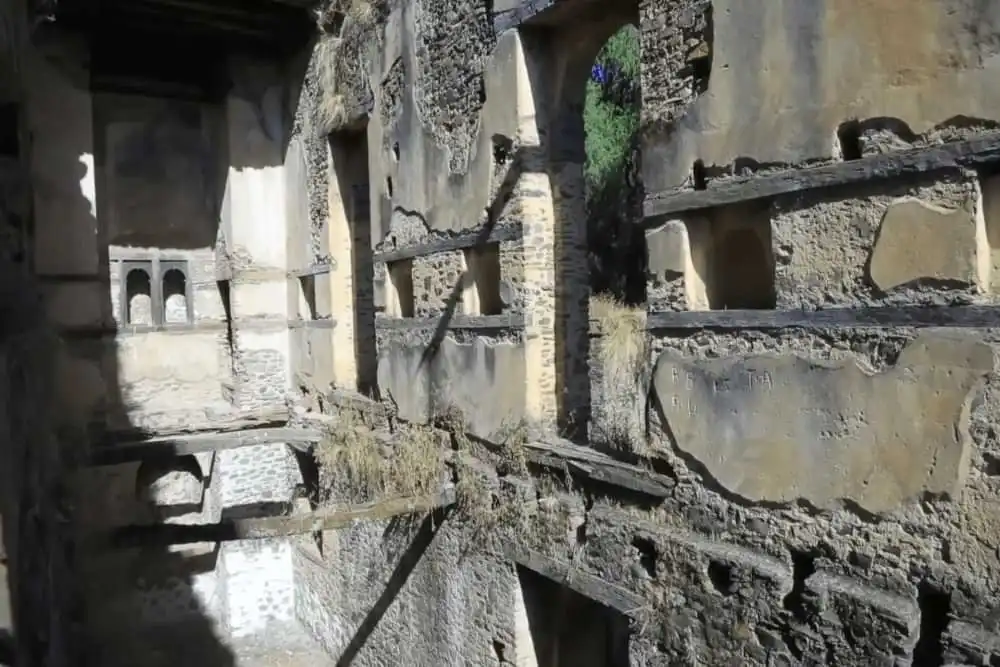
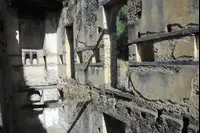
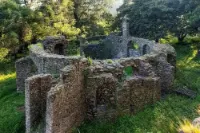
The Storehouse, or Eqa Bet, stands as one of the earliest and most important architectural elements of the Kuskuam Complex, built even before the main palace and serving as the foundation for the site’s overall construction. known as Gimbe Geffi, this storage building played a key role in supporting the administrative and logistical needs of Empress Mentewab’s royal residence. Despite its significance, the structure endured repeated destruction—first burned by the Dervishes in 1888 and later bombed by the British During WWII—yet substantial portions of its walls still stand today, offering visitors an evocative glimpse into the craftsmanship and resilience of Gondarine architecture.
The Picture House (Seel Bet)
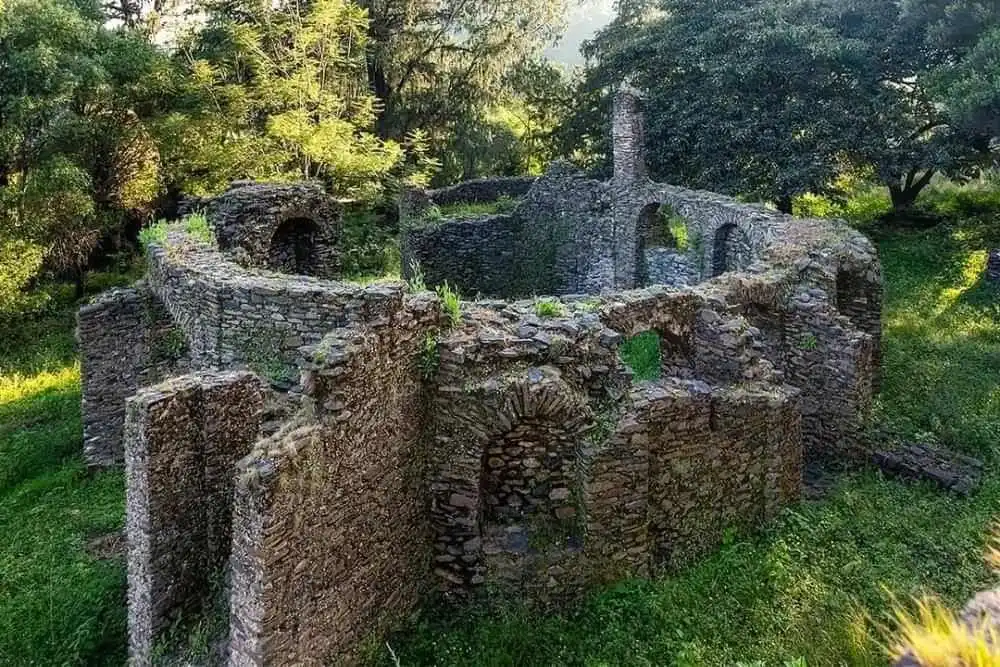
The Picture House, or Seel Bet, is a single-story circular structure situated between the Storehouse and Empress Mentewab’s palace, and it once played an important dual role within the Kuskuam Complex. It served as the sacred space where the Queen prayed during her menstrual cycle, a time when she was prohibited from entering the main church, ensuring she remained spiritually connected without violating religious customs. At the same time, it functioned as a vibrant art and craft center where 150 skilled church scribes—known as Debtera Liqa’unt—carved pens, mixed pigments, prepared parchment, and painted religious icons. Although the upper structure was destroyed during the Dervish attacks, the remaining walls still testify to its historical and cultural significance.
Empress Mentewab’s Dining Hall - Shinawa
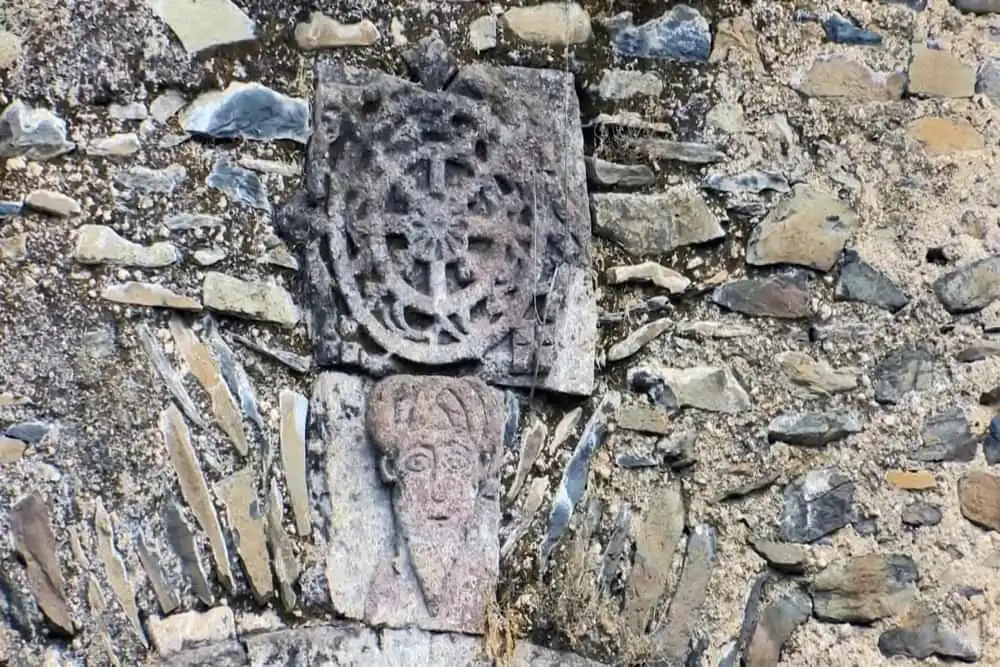
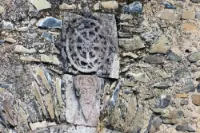
The Dining Hall at Kuskuam, an elegant structure once used by the many attendants who served the palace and by the 150 scribes or priests of the church, reflects both practicality and artistic expression. Designed with two side rooms that acted as a traditional cooling system for tej (honey wine), the hall also features six candle niches that once illuminated the scholars’ evenings with a warm, ceremonial glow. Its doors and windows are richly decorated: the windows display the iconic crosses of Gondar, Lalibela, and Axum, while the first door bears the image of Abba Samuel of Waldiba riding a lion and the second depicts the Egyptian Abune Yohannes, marked with the Lalibela cross above him and flanked by an elephant.
The hall is famously known as Shinawa, a name born from a clever exchange of Qine (poetic satire). During an earlier feast, the Empress had served a lean portion of meat, prompting the clergy to subtly criticize it through Qine by comparing it to Gim Arda, a term that refers both to a type of wood used for the construction of the hall and low-quality meat. Understanding their hidden criticism, the Empress later decided to lock the hall during another banquet. The scholars, unaware that the door had been secured, attempted to leave—only to find it locked. They asked the guard to open it, but he insisted he must first consult the Empress. When she arrived at the hall in response, one of the scholars cleverly asked her, “What is five hundred plus five hundred?” The Empress replied, “Shi Newa”—meaning “a thousand,” but sounding like “relieve yourself now.” Amused by his witty plea, she rewarded the poet for his sharp wit.
Scottish explorer James Bruce’s Residence
Behind the Dining Hall is the building where the Scottish explorer James Bruce stayed for five years. Bruce, who came to Ethiopia under the pretext of studying the source of the Nile River, is said to have married the Queen's daughter, making himself a member of the royal family. The building featured a private toilet, a guard's quarter, and a special shelf for books. In front of this residence there is a building used to house the Queen's various guests.
James Bruce entered Ethiopia through Axum, reached Gondar, and finally left through Sudan taking the Book of Enoch and Apocalypse of John (Raəyya Yohannes )with him. He is credited with reintroducing the Book of Enoch to the Western world, preserved for centuries by the Ethiopian Orthodox Church even as the text had been lost to the West. Bruce gave one copy to Louis XV, the king of France, which now resides in the French National Library, and another to the Bodleian Library at Oxford, while he retained the third—though it too eventually passed to the Bodleian. Prior to this, only fragments of the text were known in the West, including Aramaic pieces from the Dead Sea Scrolls and versions in Latin and Greek. Bruce’s finding made it possible to produce the first English translation in 1821, bringing this ancient and previously inaccessible work to a much wider audience.
Baltena Muya Bet (Women’s Skill House)
Here, women were trained by Empress Mentewab in traditional crafts such as weaving shemma (handwoven Ethiopian cloth) and making handcrafted baskets (məsob, səfed), as well as in the refined art of preparing doro wet, Ethiopia’s national dish. The building stands today as a powerful reflection of the Empress’s vision to elevate women through skill, creativity, and economic independence.
Debre Tsehay Qusquam Museum
This museum building was used to house the arc of the church during Emperor Haile Selassie’s restoration of the main church. Today, its two rooms house invaluable treasures.
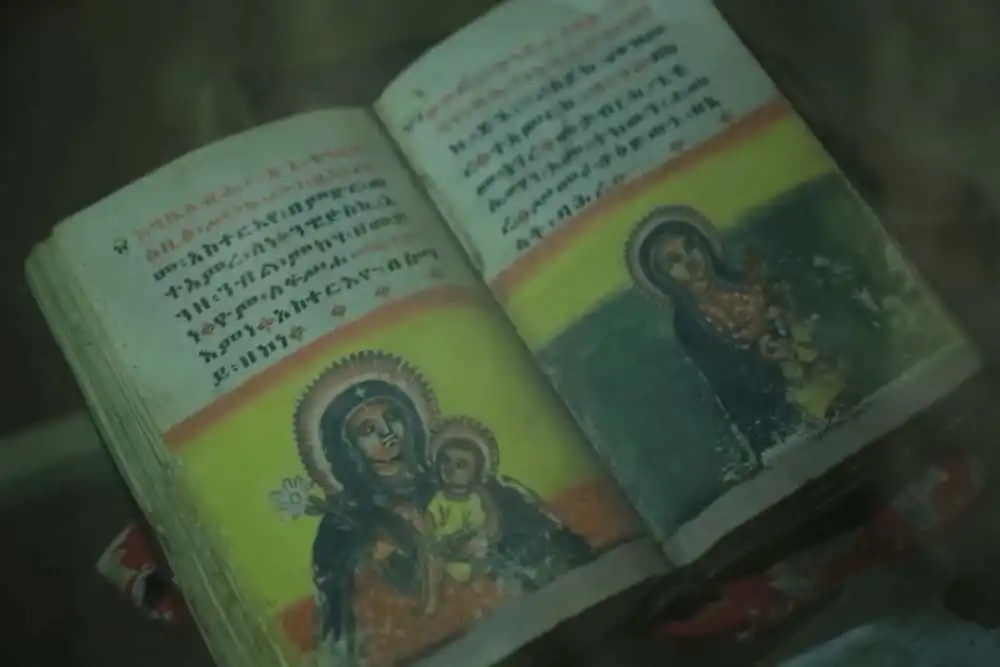
In the First Room, visitors encounter a remarkable collection of parchment manuscripts and Sinkesars (hagiographies) that recount the lives of martyrs and saints, including the revered Gedle Mariam, believed to have been written between the 16th and 17th centuries. The room also preserves a bronze censer modeled after the Virgin Mary and the Twelve Apostles, finely crafted priestly vestments, and a suitcase made of bamboo and leather once used to store the Empress’s jewelry, along with several other sacred and ceremonial objects
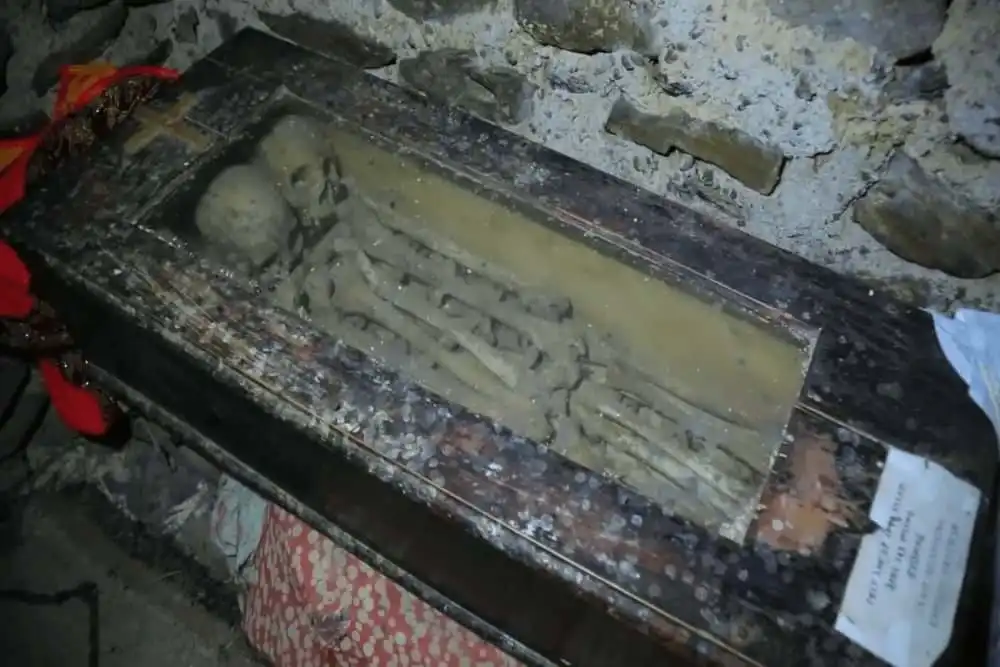
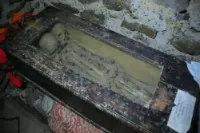
In the Second Room, the remains—skeletons of Empress Mentewab, her son Iyasu, and her grandson Iyoas—are carefully preserved, alongside a painting of the Virgin Mary on cloth, created during the Queen’s time, and a painting of the Trinity, which is a second copy of one of the artifacts taken by the British from Emperor Tewodros. The room also displays the Queen’s reading lecterns made of leather and metal, a stackable bed crafted from woven leather straps, a wooden agelgil (traditional food basket), a drum, and several other artifacts, all reflecting the royal and religious life of the Kuskuam complex.
Empress Mentewab’s Legacy Inside Fasil Ghebbi
Within the Gondar Royal Enclosure , the Empress and her son Iyasu II built one of the most beautiful two-story palaces, incorporating lessons from earlier constructions. Its carvings and cross motifs from Gondar, Lalibela, and Axum are among its most defining features.
She also built the Kechin Fetay Gimb (Thin Weaver’s Tower), also known as Adey Gimb, just three meters from her palace, which mirrored the activity she promoted in the Kuskuam Complex—serving as a dedicated space for teaching and advancing craftsmanship and traditional arts to woman.
The QusQuam Complex is more than a historic ruin—it is a living symbol of Gondar’s royal past, spiritual depth, and enduring traditions. From the legacy of Empress Mentewab to the nearby Yekolo Temari schools preserving ancient theological learning, and the vibrant annual Kuskuam Mariyam celebration each November 15 (Hidar 6), the site offers a powerful blend of history, faith, and culture. A visit to Kuskuam is not just a sightseeing stop, but a deeply moving journey into the heart of Ethiopia’s imperial and spiritual heritage. Kuskuam can be easily included in a one day Gondar city tour , making it a deeply enriching stop within a single unforgettable day of exploration.
To make the most of your journey, book your Visit to Ethiopia with Worqamba Ethiopia Tours, including visits to Simien Mountains and Gorgora, and discover the full beauty and heritage of North Ethiopia.
Related Tours

10 Days Simien Mountains Trekking
Trek to simien Mountain 1 day
Northern Ethiopia 12 Days Tour